
Ce que l'expérience Open Eyes m'a appris sur l'hospitalité à Mumbai
Business travel often creates two predictable food patterns.
The first is overcontrol: safe choices, plain meals, and a quiet refusal to engage with the place you are in. The second is the opposite: fatigue, hunger, a buffet, and a plate built more by impulse than intention.
On my final evening in Mumbai, I was reminded that there is a better middle ground.
That day had started early and heavily. I was up at 05:00, jet-lagged and tired, and the hours that followed were long: difficult air, long drives, customer meetings, uncertainty, and the kind of travel rhythm that narrows your focus to the next obligation. By the time I returned to the hotel that evening, dinner was not just another meal. It felt like the first real exhale of the day.
I had planned for it.
I skipped breakfast and kept lunch light because I wanted room for a proper dinner. My intention was simple: stay protein-first where possible, try as many local dishes as I reasonably could, and do it with enough restraint to keep the experience enjoyable rather than excessive. That meant small portions, open eyes, and a willingness to ask questions.
That is where the evening changed.
Before I started, the staff asked exactly the right things: my preferences, whether I had allergies, whether I could handle spicy food. I told them I wanted local food, had no allergy concerns, and loved spicy dishes. From there, they did far more than point me toward the buffet.
They guided me.
They showed me the dishes, explained what I was looking at, helped me select portions, and brought a level of attentiveness that immediately elevated the experience. Fresh naan and other breads appeared along the way. Conversations opened up around traditional street food, regional specialties, and the differences in food customs across India. What could have been a good hotel buffet became something much more memorable: a meal shaped by pride, knowledge, and human warmth.
That is what stayed with me most.
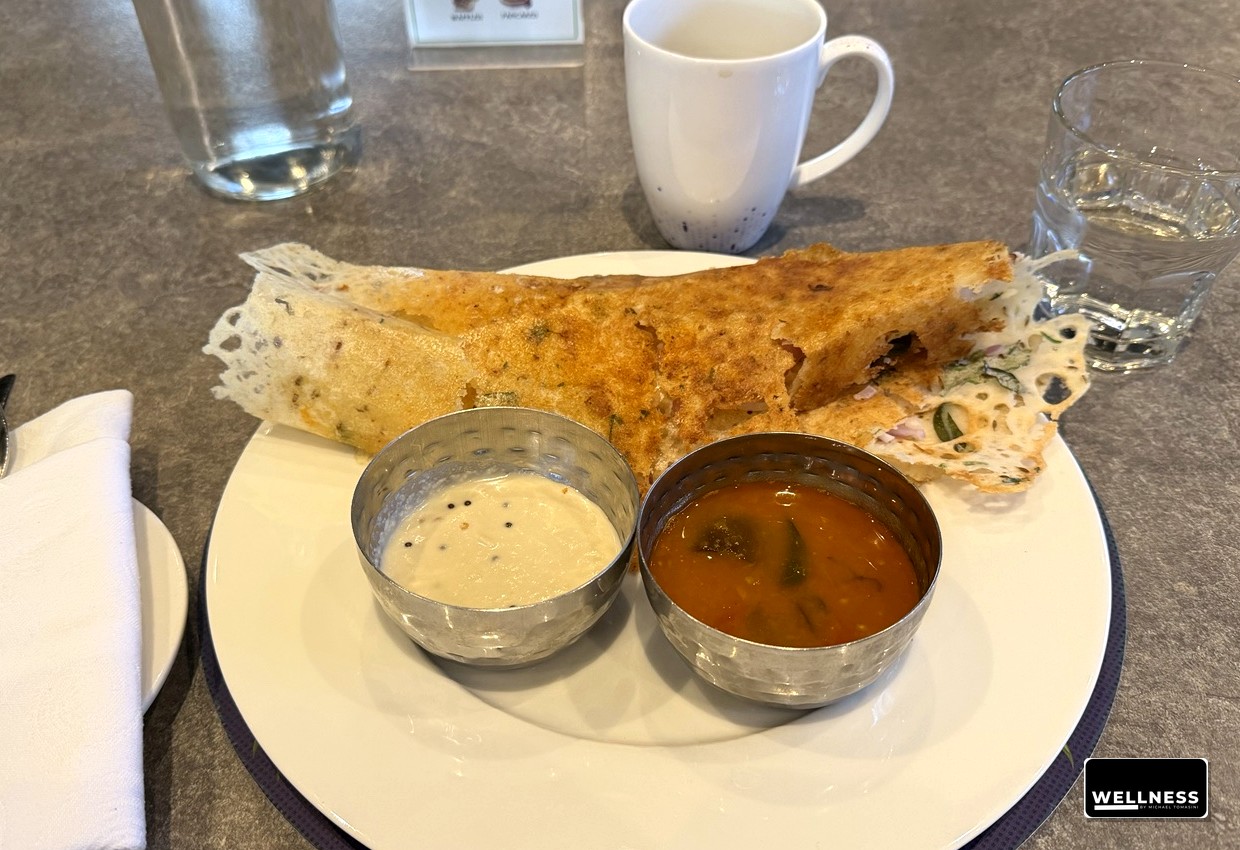
Yes, the food was excellent. My favorite savory dish was a local green curry chicken. On the sweeter side, I especially enjoyed a pancake-like preparation that was completely new to me and instantly memorable. Not every bite was for me — one coconut-based item confirmed that I still do not enjoy coconut — but that was part of the value too. Cultural openness does not mean pretending to love everything. It means being willing to try, to learn, and to let the experience be real.
Because I dislike wasting food, I asked for the smallest possible portions. That made it possible to explore broadly without losing all structure. The evening was still more indulgent than restrained, and certainly more carb-heavy than I would choose on an ordinary day, but I knew that going in. This was not accidental eating. It was deliberate participation.
That distinction matters.
A lot of people think eating well while traveling means either shutting the experience down or surrendering to it. I think the better model is more nuanced: lead with some structure, stay curious, and let local expertise improve your decisions.
That is what happened here.
What impressed me most was not only the quality of the food, but the quality of the care behind it. The staff were attentive without being intrusive, knowledgeable without being performative, and generous in a way that made the whole experience feel deeply welcoming. By the end of the evening, I felt relaxed, satisfied, and more connected not just to the meal, but to the place itself. As I left, they said their goodbyes personally and even let the breakfast team know that I should be introduced to local breakfast foods the next morning so that I could complete the experience properly.
That is not routine service.
That is hospitality practiced with intention.
For me, that was the deeper lesson of the evening. Travel wellness is not just about calories, protein, or meal timing, although those things matter and I do pay attention to them. It is also about how you enter an unfamiliar environment. If you arrive overly rigid, you often miss the culture. If you arrive careless, you often lose the experience in excess. But if you arrive with open eyes — curious, respectful, and grounded enough to accept guidance — better outcomes become possible.
Sometimes the smartest thing a traveler can do is stop pretending he has to navigate everything alone.
Ask questions. Trust knowledgeable people. Let expertise reduce friction. Enjoy the culture without giving up all structure.
That evening in Mumbai reminded me that openness is not the opposite of discipline. Done well, it is one of its more mature forms.
Have you ever had a meal while traveling that changed the way you think about food, culture, or hospitality?

 English
  Deutsch
  Français
Laisser un commentaire